
Building a Full Marketing Track in a CRM: How a Business Turns Chaos into a System
In short: A full marketing track in a CRM gathers every client touchpoint, from the ad click to the repeat purchase, in one place. This lets a business see which channels bring profit, process requests faster, lose almost no inquiries and automate repeat sales.
Successful sales today are impossible without transparent integration of marketing and CRM. When a company sees only separate stages of its interaction with a client, from the ad click to the final invoice, it risks losing not only money but the clients themselves. A full marketing track in a CRM changes this. It lets a business see the whole picture: for example, where the client learned about the brand, how long it took them to decide, which actions convinced them to buy and why they come back again.
CRM Solutions helps businesses choose and implement a CRM that people actually use, and trains teams to work with it. The company focuses not on selling any system but on solving the need: if a CRM is not needed, they will say so honestly. Thanks to this approach, more than 95% of the company’s clients actively use the solutions implemented for them.
How a CRM turns data into a system
The idea of the track is simple. All points of interaction with the client are recorded in one place. It can be an ad click, a call, an email or a message in a messenger. Instead of scattered pieces, the business gets the client’s complete journey. Managers no longer work “in the dark”, because they have the person’s full history in front of them, which helps them understand the client’s needs and predict the next step.
The CRM automatically collects all requests from different channels and shows the source of each lead, the manager’s response time and the result of the communication. At this point marketing becomes measurable. The manager can now see which channels actually bring profit, and the marketer gets precise figures to analyze and optimize the budget.
In effect, a CRM moves a business from chaos to a system. The collected data stops being dry statistics and becomes a tool for making strategic decisions.
Automation as a growth factor
A full marketing track is not limited to collecting data. The biggest effect comes when the CRM takes over part of the routine work itself. The system:
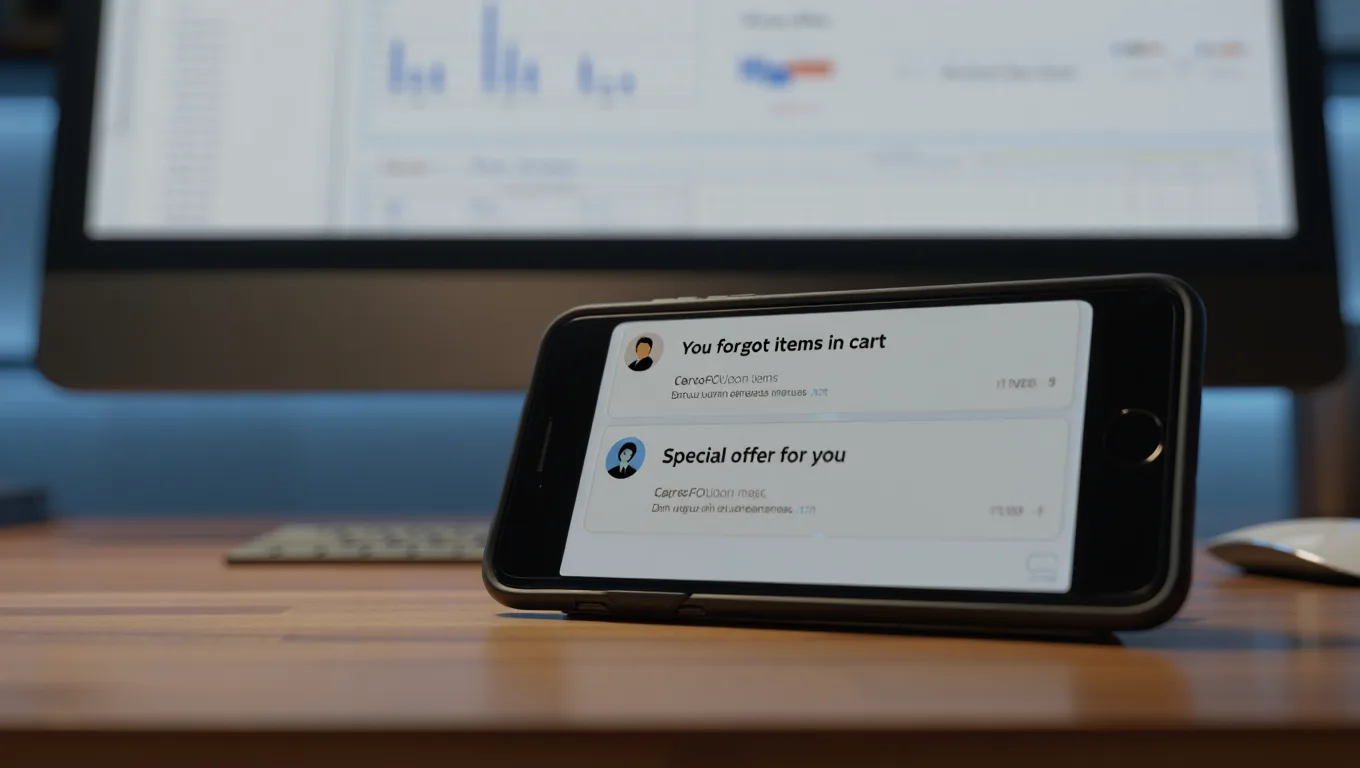
- reminds the client about an abandoned cart, encouraging them to complete the purchase at a convenient moment;
- sends personalized offers that take previous interests and purchases into account, increasing the chances of conversion;
- brings back those who hesitated with trigger messages, special discounts or extra bonuses;
- activates repeat sales by sending reminders about new services, updates or relevant products;
- builds loyalty by keeping up communication even after the purchase is complete.
All this lets a business stop spending money on ineffective channels and focus on the tools that really work and ensure steady growth.
Case study: a beauty salon and a full marketing track in a CRM
A beauty salon faced a typical problem: requests came in from Instagram, Facebook, the website and messengers, but a large share of them got lost. Managers kept records by hand, appointment reminders were often sent late, and almost a third of potential clients never made it to the service.
Implementing Planfix made it possible to gather all requests in a single system. Each client got their own card with a history of interactions, from the first ad click to a repeat visit. The CRM automatically distributed leads by channel, launched appointment reminders and generated analytics for each advertising campaign.
The result was tangible. Request processing became almost twice as fast, missed contacts were reduced to a minimum, and repeat visits grew by 20%. For the first time, the manager got a clear picture of which channel brings the most profit and how to forecast the salon’s workload months ahead.
How key metrics change after implementing a full marketing track in a CRM
| Metric | Before CRM (chaotic marketing) | After CRM (full track) | Change for the business |
|---|---|---|---|
| Cost per lead | high, hard to measure | controlled, transparent | 15–20% budget savings |
| Request processing speed | from hours to days | a few minutes or hours | conversion up to 50% higher |
| Missed requests | up to 30% | less than 5% | missed requests almost gone |
| Repeat purchases | occasional | systematic, automated | +15–25% to revenue |
| Analytics by channel | missing or fragmented | full transparency | strategic planning |
How the role of a CRM in business is changing
In the coming years, the CRM will become the center of decision-making, not just a sales tool. Marketers will be able to test hypotheses right in the system, and business owners will see the real economics in real time.
In effect, businesses are moving from random experiments to a systematic model with predictable results. Companies that are building a full marketing track in their CRM today are gaining a strategic advantage for tomorrow.
What to remember
A full marketing track in a CRM is a new way of thinking for a business. It lets you turn data into a strategic resource, build predictable sales and develop long-term client loyalty. In effect, the company gets a tool that cuts costs, increases efficiency and creates a competitive advantage at the same time.
This is where choosing the right partner matters. CRM Solutions implements systems, helps a business understand which CRM it really needs, and trains the team to use it in a way that brings results.
So if you want to move your marketing from chaos to a system and get a clear picture of how your business is developing, book a consultation with CRM Solutions (the website is in Ukrainian) and see how a CRM can work for your company.
FAQ
What is a full marketing track in a CRM?
It is a record of every interaction with a client in one system: an ad click, a call, an email, a messenger message. The manager sees the client’s full history, and the marketer sees precise figures by channel.
What can a CRM automate?
Abandoned cart reminders, personalized offers, trigger messages for those who hesitated, reminders about new services for repeat sales, and communication after the purchase.
How do metrics change after implementation?
According to the article: 15-20% budget savings, conversion up to 50% higher, missed requests down from up to 30% to less than 5%, and repeat purchases adding 15-25% to revenue.