
Why Students Use AI and How to Prevent It
In short: Students use AI for writing tasks not out of laziness or a wish to cheat, but because writing is hard for them, topics feel irrelevant or a grade seems to be the only goal. To prevent this, understand these reasons and change how you set tasks, rather than relying on AI detectors that can be fooled.
Do you think you could tell that a text was written with the help of AI? Let’s check! Here are two texts. Look through them and decide whether each one was written by a human or generated by AI.
Text 1:
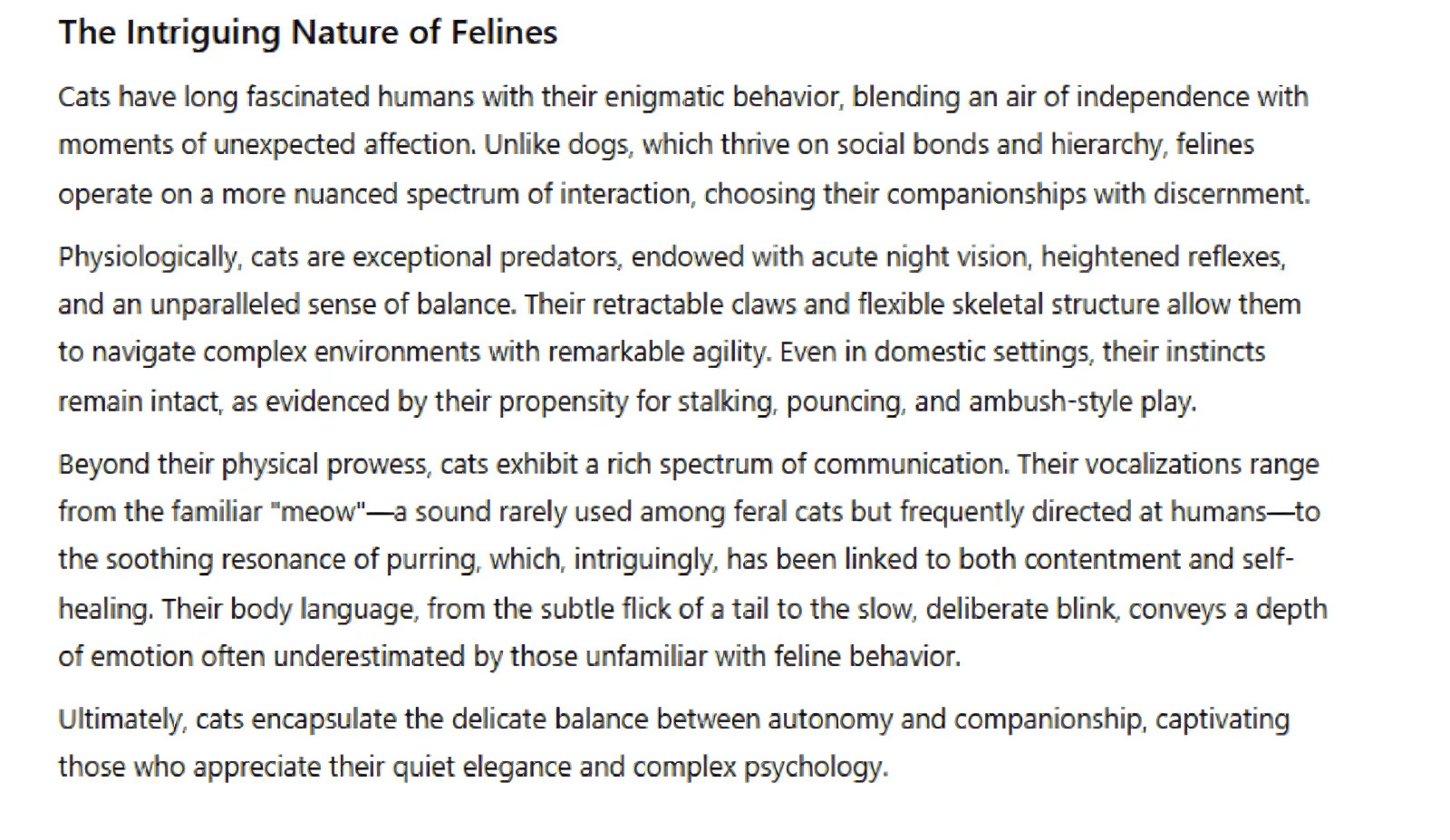
Text 2:

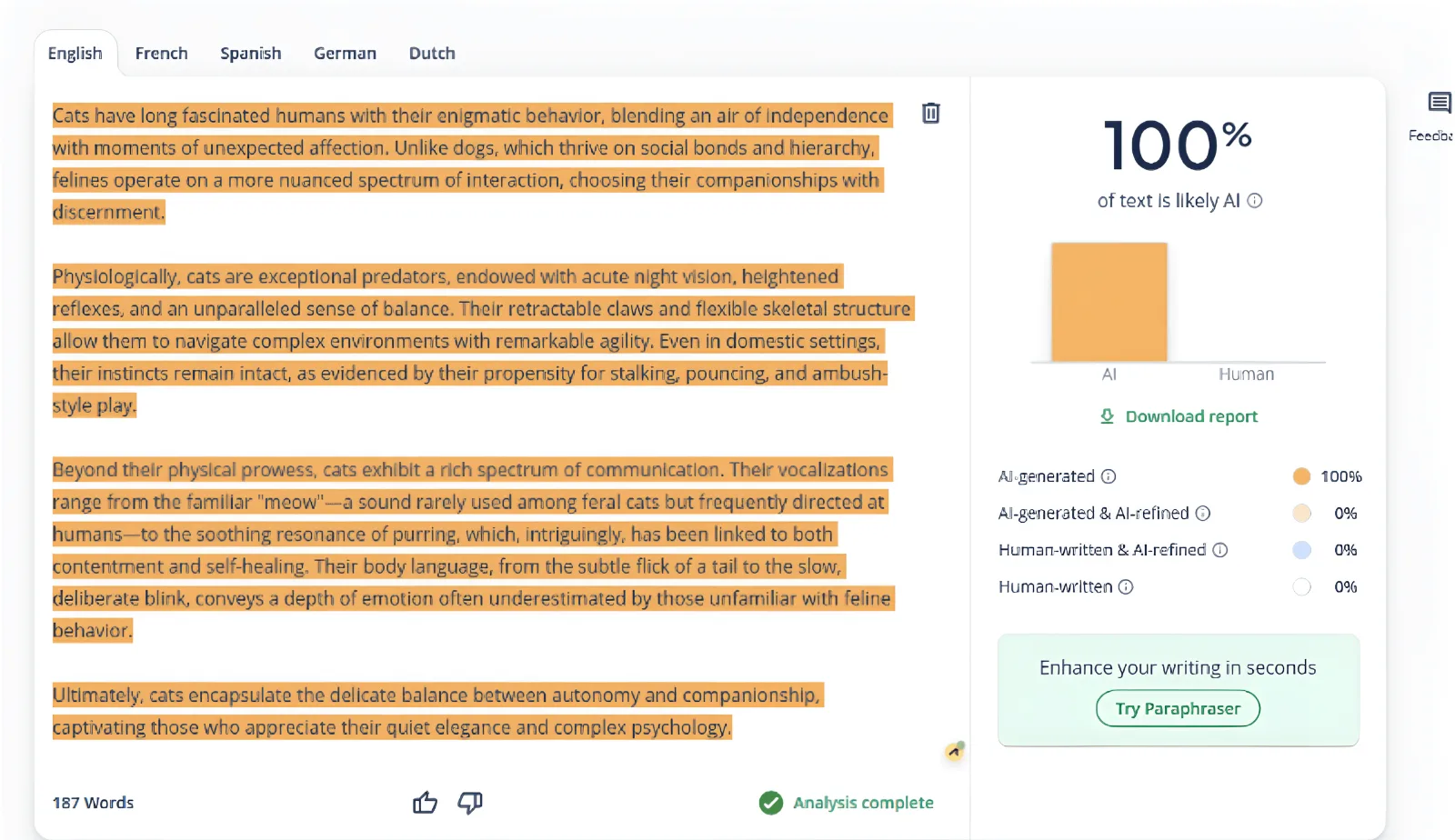
And now let’s see what an AI detector tells us about them.
Text 1:
Text 2:
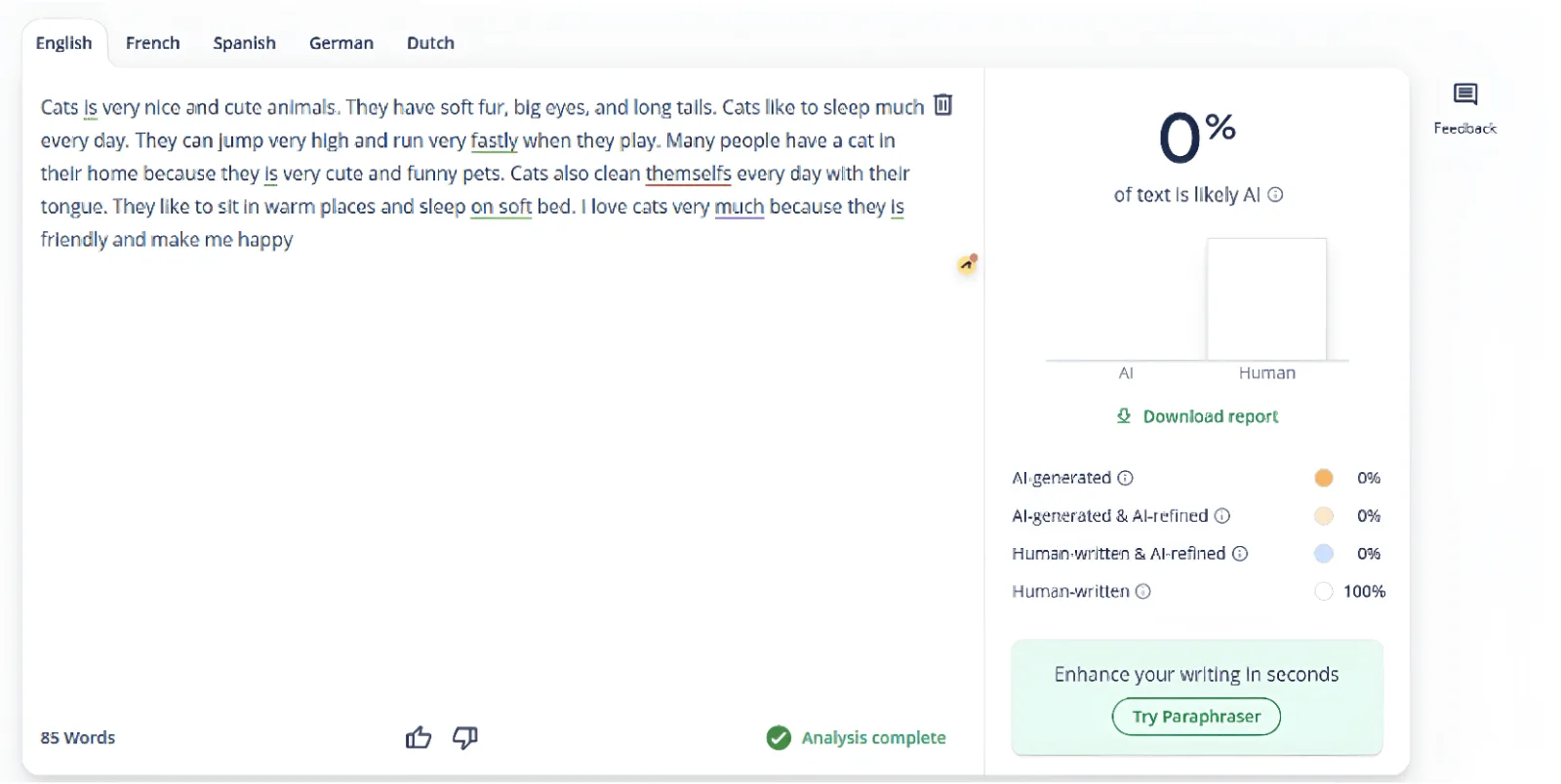
So… that was easy! The first text was written by artificial intelligence, while the second was written by human intelligence.
Are you absolutely sure?
In fact, both texts were generated by AI, just with different prompts.
Text 1:
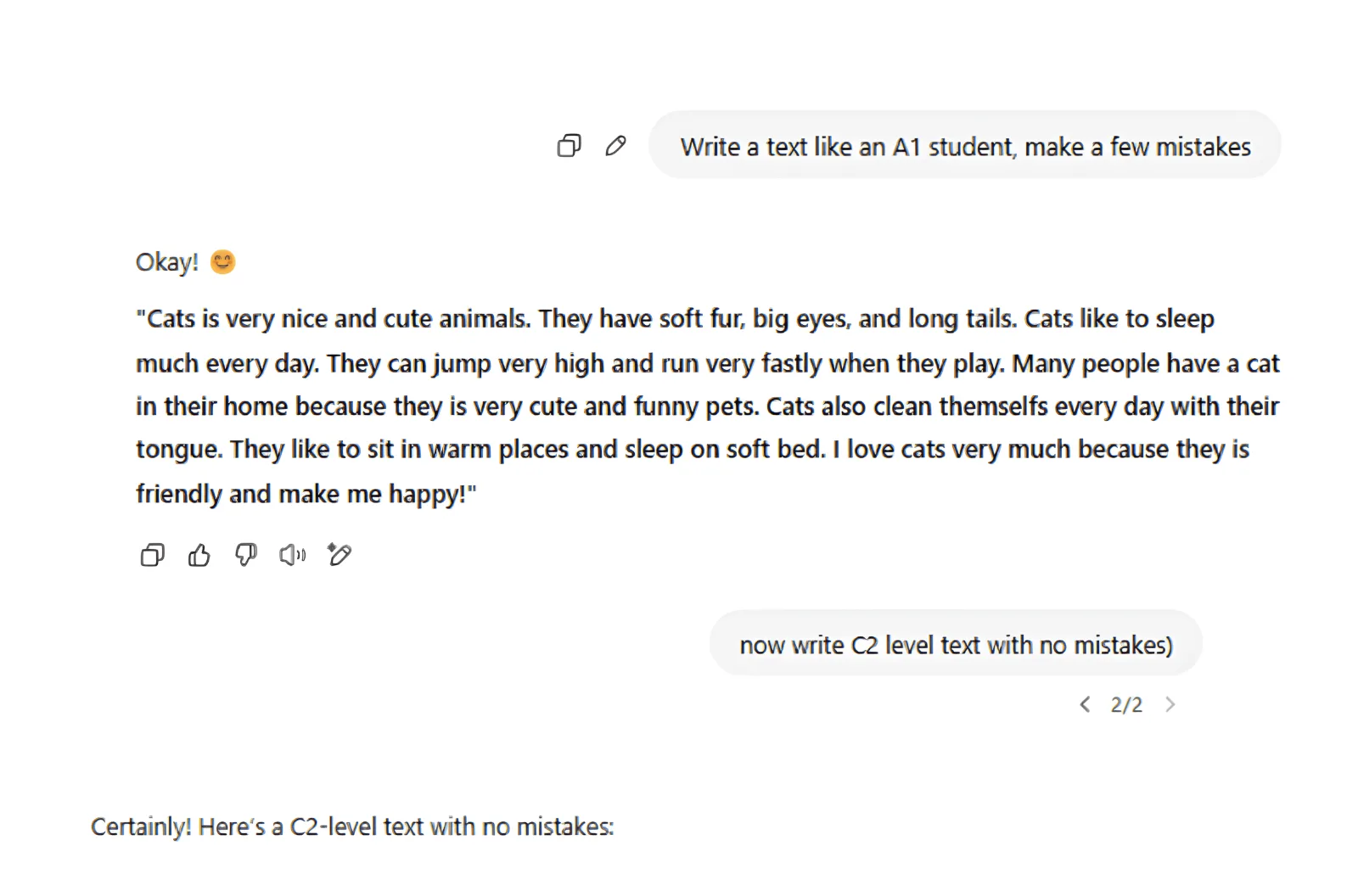
Text 2:

Advanced artificial intelligence can fool not only detectors but us too!
It gets a bit creepy when you think about it, doesn’t it? And it is not at all clear what to do about it! How, in that case, can we claim that a text was written by AI?
Doesn’t the phrase “Here is your generated text!” at the end of a homework assignment make you feel anger, sadness, despair or guilt?
Why do students do this? Do they want to deceive us? Or are they just lazy?
That is exactly what we will talk about in this article.
Before we start, pause for a moment. Close your eyes, take a deep breath in and out, clear your mind of thoughts about your students, recall your school or university days and think: what were the reasons you ever cheated?
Without any doubt, in certain circumstances you definitely did! (If not, then know that you are amazing!)
The reasons for using artificial intelligence are not that different from the reasons you once cheated…
And to prevent the misuse of AI, we have to understand these reasons.
So what would your students tell you about it, if they could?
“Writing texts is hard for us”
“We don’t know how to structure a text properly. We find it hard to come up with arguments and explain our own opinion. We are not used to long texts and hardly ever read them; instead, every day we watch short TikTok videos and social media posts. We really find it hard to concentrate. Thanks to TikTok and YouTube we are used to getting what we want instantly, so big tasks feel overwhelming to us. If a task looks too difficult, when we have no idea where to start or how to finish it, procrastination kicks in. And at the last moment before the deadline, AI comes to the rescue.”
How can you help us?
- Show us step by step how to create a text: tell us how to come up with an idea, make a plan and divide the text into an introduction, a main body and a conclusion; explain what exactly can go into each part of the text, how to write a draft and how to turn it into a finished text.
- Let us start with short texts, gradually increasing the length and difficulty.
- Give us examples, templates and lists (for example, a list of the structural elements of a text).
- Let us work on a text in pairs.
Please note that these and the following tips are better suited to writing tasks done in class than to tests. However, if your students become more confident in writing during lessons, there is a greater chance that they will write their own text in a test too.
“We are simply not interested”
“We don’t understand why we need this: the topics are detached from life, the tasks contain nothing interesting, and the structure is too complicated… We don’t understand how this can help us in real life. Not only do we see no point in doing such tasks; we don’t even have a chance to influence the learning process.”
How can you help us?
- Adapt the topics: in lessons, give us topics that match our interests, hobbies, current events and popular trends. This will help us feel the practical value of the tasks. Learn more about our world; follow trends, memes and news.
- Explain how writing texts helps improve our English, even our spoken English.
- Give us a bit of freedom when possible: let us stray from the topic a little (for example, when we have to write a review of a physical product, let us write about a game), and also experiment a little with structure, style and questions.
- Explain how writing this text can benefit us in real life (for example, writing a résumé, running a blog, communicating at work). It is important not only to explain this in general terms but to stress the importance of each particular text before we write it.
- Keep it close to real life: let us write a review in the format of a Google review or a social media post, or post it on a real website.
“Spending several hours studying just for a grade is really discouraging”
“Spending hours on a task and getting nothing but a grade in return is really discouraging… What did we do well? What still needs work? What mistakes were there? How can we do better next time? If you don’t give us feedback, we lose the motivation even to try…”
How can you help us?
- Give us good, personalized feedback: explain what exactly you are assessing and why. Make sure you praise us: point out what has improved, what went well and what needs improving. Explain how it can be improved. Instead of simply pointing out our mistakes, explain them to us. Use the sandwich method: when you give feedback, end it with an encouraging phrase or something positive that relates to us personally. Recommend useful resources that can help us deal effectively with the challenges of writing.
- Analyze sample texts in class, so that we can understand what makes a text good, which mistakes are common and how to avoid them.
- Organize work on common mistakes as a separate task and let us work on it in pairs.
- Regularly do delayed error correction at the end of the lesson when we write sentences or texts. You can also write short comments for us and go over the mistakes before the next lesson. If you teach offline, collect the texts and look through them.
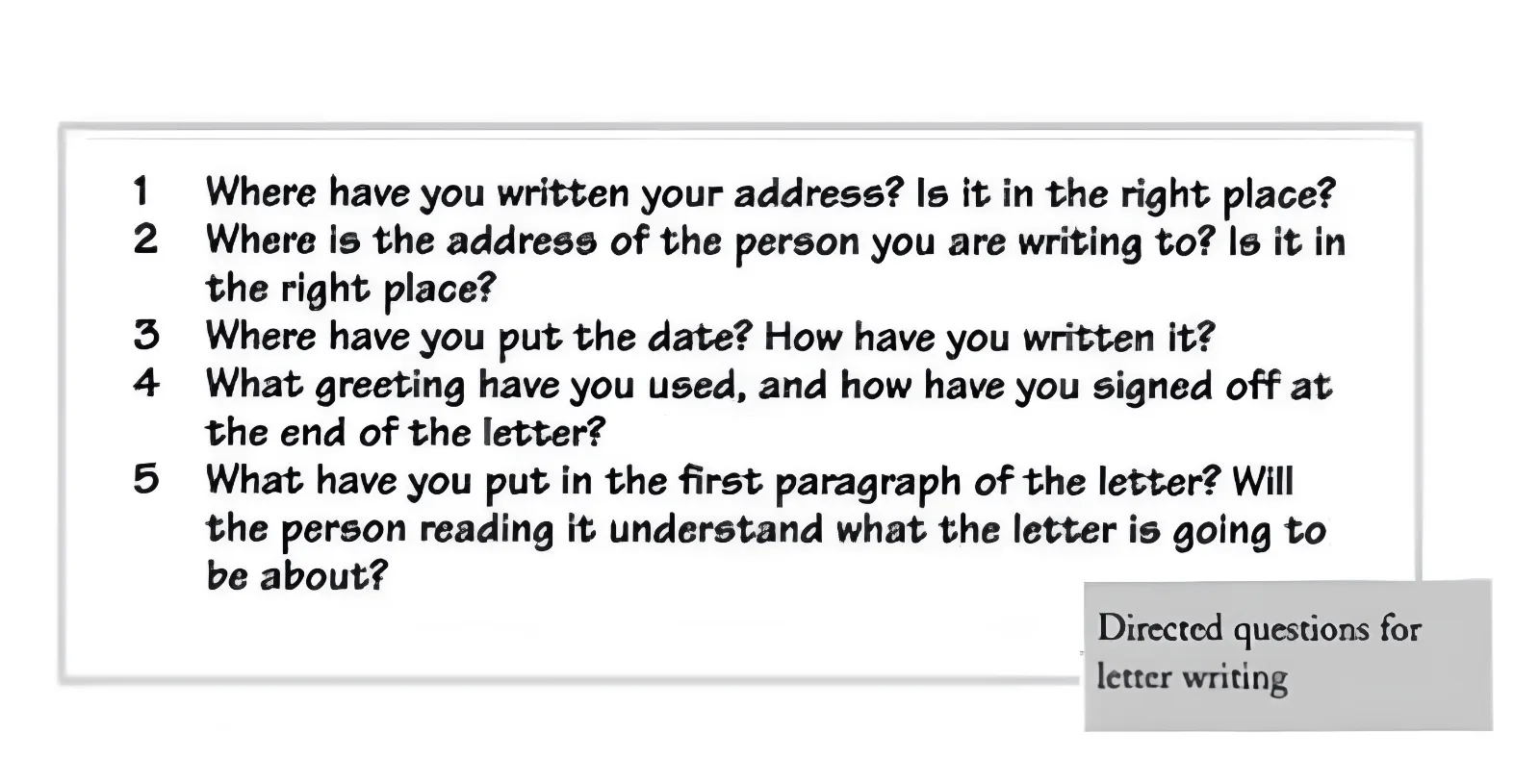
- Encourage self-assessment. Here are a few ideas:
- use checklists (for example, a checklist of mistakes or of the structural elements of a text);
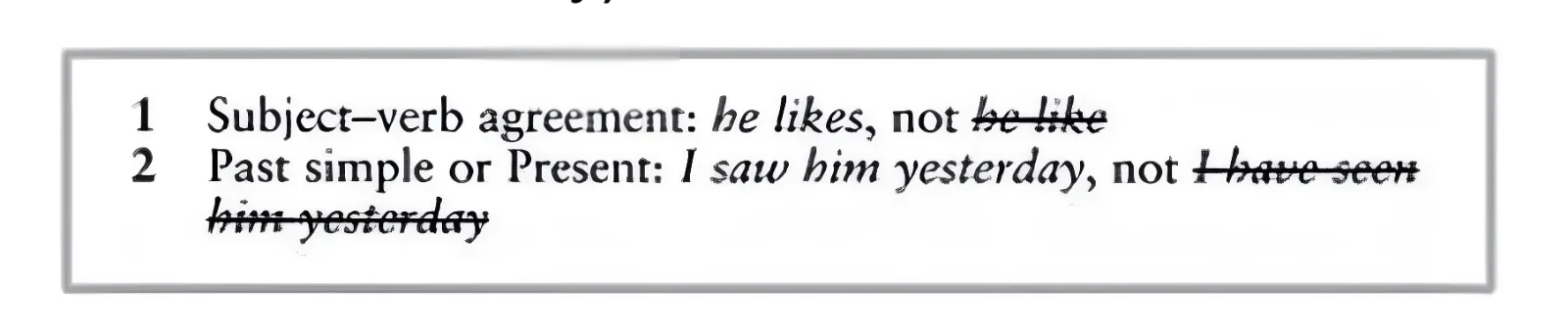
- use direct questions;
- give us categories of different mistakes and let us correct the text ourselves. - Introduce peer review of each other’s texts: for this, give us a form for leaving comments, or a checklist.
“We are scared”
“We are afraid of making a mistake and looking foolish. We are scared of getting a bad grade and disappointing you, ourselves and our parents. We are afraid that our real level of English is not good enough.”
How can you help us?
- Explain that mistakes are an integral part of the learning process: show that you make mistakes too. Help us feel safe with you and among the other students; create an atmosphere where there is no room for judgment. Don’t attack us; try to understand. Explain to us that a task done by AI will upset you more than a low grade, because that way we lose the chance to grow.
- Help us understand that growth matters much more than the grade: explain that a grade is only a tool for tracking progress, not the goal itself.
- Let us share the difficulties we face, so that you can give us advice.
- Praise us for progress, effort and the work we put in, not just for our intelligence. When you praise us for being smart, it makes us afraid of not living up to your expectations.
“We are very tired”
“Constant deadlines, a whole range of different subjects, tasks that appear one after another, stress because of the atmosphere at home, relationship problems, worries about the future… sometimes it is too much.”
How can you help us?
- Let us show our tiredness and emotional exhaustion and get extra time for the task. Don’t push even harder at such moments; support us if you can.
- Simplify the task (for example, write 120 words instead of 170, or only 2-3 paragraphs instead of 5).
- Let us work only on the plan in class and finish writing the text later, after the lesson or over the weekend.
- Devote more lesson time to writing the text: shorten other stages of the lesson to focus more on the key task.
- Let us write the text in groups or pairs (only if it is not a test).
“We struggle to manage our time and put everything off until the last minute”
“We procrastinate. All those TikTok videos are a comfort for us, a quick hit of the pleasure hormone, so we watch and watch… And then, the night before the deadline, when there is not enough time left, we have a quick solution. And in class we don’t feel time passing; it runs out quickly, and we have to present our work in front of the class, so we use AI.”
How can you help us?
- Use a calendar (it can simply be an image with test dates or deadlines). This way we can see what we need to prepare for and how much time is left.
- Break a complex writing task into smaller parts, with subtasks for each stage of the writing process. Add this list to the task so that it is easier for us to do. Every tick on the list gives a rush of happiness hormones, which helps us see the task as less difficult.
- Recommend that we track how long a writing task takes, so that in the future we know how much time we need.
- Don’t forget positive feedback: we need to be praised!
- Set aside 5 minutes to introduce us to time-management techniques: tell us which methods you use, share an interesting video on the topic with us.
- Use a timer or a clock in class, so that we can see time passing and understand how much is left.
- Give us more time for the task. Tell us that if we really can’t finish on time, it is better to ask for extra time than to use AI just to make the deadline. (But beware of real procrastinators, who will put everything off again and again!)
“We are just taking the opportunity”
“If something can be done quickly and easily, why make it complicated? If nobody checks whether we use AI and there will be no consequences, why make an effort?”
How can you help us?
- Explain to us what is acceptable when doing tasks and what is not, and what the consequences will be if you find that our texts were generated by AI.
- Discuss with us the harm of using AI this way, not as a lecture but as a discussion.
- Explain why developing writing skills can be important for us (for example, in exams).
- It is important to be consistent in what you say and not to let a single case of AI use slip. If a teacher suspects that a task was done with the help of artificial intelligence, it is worth checking it with special tools for detecting AI-generated content.
“We don’t think it is anything bad”
“We don’t copy from others, we don’t steal texts, we just help ourselves a little. We don’t think it is some huge problem. Everyone uses AI and gets high grades. We just didn’t know what to write about: the topic was too hard! It is fine that we used AI. It is a very convenient and useful tool.”
How can you help us?
- Don’t forbid us to use AI. That will only strengthen our desire to resist the system. Let us use AI as an additional tool. Explain in which cases it can be used, in which it can’t, and why.
- Let us use AI to check and improve our texts. Ask us to highlight the places in our texts that AI corrected and add an explanation why. Suggest that we discuss this in pairs. Show us where AI missed a mistake, where it corrected the text wrongly, where it ignored the structure and where it failed to make the text more readable. This way we can see its limitations.
- Let us use AI to look for ideas or pictures for our texts.
“Your opinion means a lot to us”
“We don’t feel that you are sincerely interested in our growth, in us. We don’t see you as an authority. We either see you as a friend who gives in to us or, on the contrary, we don’t trust you and are even afraid of you. You are not a role model for us. We feel that you are attacking us.”
How can you help us?
- Try to be both an authority and a friend at the same time. Don’t be too strict, but don’t be too lenient either. Otherwise we may dodge your questions, lie, deny our mistakes or cheat all the time.
- Give us clear rules, tell us the consequences of breaking them, use positive and negative reinforcement in response to good behavior, and apply appropriate consequences for breaking the rules. Be consistent: don’t ignore either good or bad behavior, and don’t make up new rules on the go.
- Show us that you care about us.
- Take a few minutes to ask how we are doing. Create an atmosphere of understanding and support.
- Remember what we tell you and ask about it next time.
- Notice if we look sadder than usual. Ask us about it.
- Be honest about your feelings. If you are not having a good day or don’t feel well, tell us. It will be easier for us to trust you and open up if we see that you open up too and are a real person.

How to make it harder for students to use AI
Basic level
Don’t trust texts with no mistakes or with C1-level vocabulary. It is practically impossible for even the strongest student to write a text without a single mistake. There may be a typo somewhere, a comma in the wrong place and so on. You know your students, and if an A1-A2 student hands in a flawless text with complex vocabulary, that is definitely a red flag.
Important note: Some written or translated texts may be flagged by detectors as AI-generated. This may be a few sentences or a paragraph, but not more than half of the text. (There are exceptions: some people’s speaking and writing style is hard to tell apart from AI-generated text, but this happens very rarely.)
Advanced level
- Whenever possible, use tasks that require adding information about current events, personal experience, or examples from one’s own life or the lives of historical or contemporary figures.
- Add your own conditions to the task that have to be met (for example, including certain phrases, grammar or words that are being studied at the moment).
Expert level
Unfortunately, the higher the students’ level, the harder it is for detectors to determine whether AI was used. So in these cases:
Identify your students’ personal style. To do this, at the start of the course ask your students to write a text that will serve as your reference point. If you teach offline, this text should be written either under your supervision or on a very personal topic. If you teach online, ask them to write the text within a fairly short time, so that there is no opportunity to use AI.
When identifying personal style, pay attention to how students answer in class and to their interests and hobbies.
- Assess whether the text matches their style.
- Use AI to generate several texts in order to study its style and tune your inner “detector”.
And a small tip!
Students often find it hard to believe that you can tell which text was written with the help of AI and which was not. Let your students know that you are skilled with AI detection tools and that you know their level and style well. Make it clear to them that you can easily notice if a text is written flawlessly, if key facts are missing or if certain words you asked them to include are not used. Show students how you check texts (not theirs!) with AI detectors and how much AI-generated texts differ from the ones students write themselves. Show them that you are not so easy to fool.
How to approach a student who uses AI
If you have caught your student red-handed, it is very important not to crush them. Make sure your approach is tolerant.
- Don’t discuss this in front of the whole class. If possible, ask the student to stay after the lesson, talk one-to-one in a separate Zoom room or communicate via messenger.
- Don’t lecture or shame the student. Avoid phrases like: “How could you? I’m disappointed”. Lecturing will not be effective in this case and will be perceived by the student as punishment or reproach. Instead, engage the student in a dialogue and discuss how such behavior can negatively affect learning. The most important thing here is to have a conversation that the student does not perceive as an attack.
- Try to understand the reasons for this behavior in order to prevent it in the future. Ask the student why they decided to use AI. Don’t say something like: “This text was written by AI, rewrite it by Monday”. Instead, build a dialogue and listen to your student. Otherwise the student may think they are being attacked, feel strong shame, guilt or anger, and start making up excuses. This can affect your relationship with them and lead to further use of AI.
Remember that artificial intelligence is not your enemy but a powerful tool that can help you unlock a student’s potential. Use it to get inspired and make the learning process more modern and innovative!
FAQ
Can AI-written text be reliably detected?
No. Modern AI with different prompts can fool both detectors and people: in the article both texts were generated by AI, although the detector judged one of them human.
Why do students use AI for homework?
They find it hard to structure a text and concentrate, topics feel detached from life, and hours of work for a single grade are discouraging.
How can I help students write on their own?
Show step by step how to build a text, start with short texts, give examples and templates, work in pairs, adapt topics to students’ interests and explain the real benefit of each task.